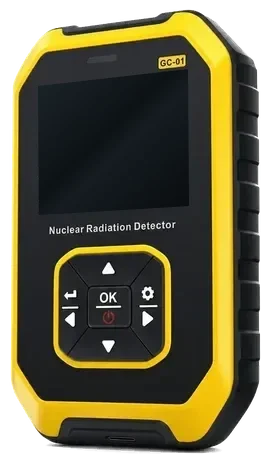
The 5 Best Home Radiation Detectors of 2026, Ranked
That vintage plate you carried home from the flea market: do you actually know what's in the glaze?
Would you notice if the old watch on your bedside table had a radium dial?
How do you check reclaimed timber before it ends up in your kid's bedroom wall?
You can't, not with your senses. Radiation has no smell, no taste, no warning tingle. By the time anything would be obvious, the question has already answered itself.
Read more
This isn't paranoia. Uranium glass, radium-dial watches, certain vintage ceramic glazes: these genuinely turn up at estate sales and antique markets, and they look exactly like everything else on the table.
For years the only real answer was lab-grade equipment: expensive, menu-heavy, and built for people who read instruction manuals for fun. Most households simply went without.
That's changed. We compared the leading consumer radiation detectors head to head (reading speed, alarms, exposure tracking, build, and price) and ranked the five worth your money. The gap between #1 and the rest surprised us.
The top 5 picks of 2026
1Best overall value1 of 5
PrecisionRad
Rated 9.7/10 by our editors, the highest overall score in this comparison
Half price at the official checkout: €49.99 instead of €99.98Free delivery, dispatched within 24 hours on working days30-day money-back guarantee
The detector we'd hand to any household: live readings in seconds, an alarm you set yourself, three alert modes, and full exposure tracking, at €49.99, less than every rival on this page.
Live Readings In Seconds: Hold it near any item and the current radiation level appears on screen; no menus, no waiting
Check It Before It Comes Home: Vintage ceramics, radium-dial watches, uranium glass, reclaimed materials; test at the stall, before you pay
An Alarm You Set Yourself: Pick your own threshold and get warned the instant a reading crosses it
Three Alert Modes: Sound, light, or silent vibration; check a market stall without announcing it to the seller
What to know
No companion app; every reading lives on the device screen, which is plenty for home checks but won't satisfy data hobbyists
Show all 11 things we liked
Full Exposure Tracking: Logs average, maximum, and cumulative levels so you see the pattern, not just one spike
Energy-Compensated GM Tube: The sensor principle serious instruments rely on, tuned so readings repeat check after check
Rugged ABS Casing: Tough enough to live in a glovebox or toolbag and come out working
Zero Learning Curve: If you can read a thermometer, you can use this; switch on and read the number
30-Day Money-Back Guarantee: Full refund if you're unsatisfied for any reason
Half Price At The Official Checkout: €49.99 instead of €99.98 (50% off), with multi-packs discounted up to 75%
Free 24-Hour EU Dispatch: Ships free and leaves an EU warehouse within 24 hours on working days
Now €49.99 (was €99.98) at the official checkout
Official checkout
This price is a promotion the maker can end without notice.
2
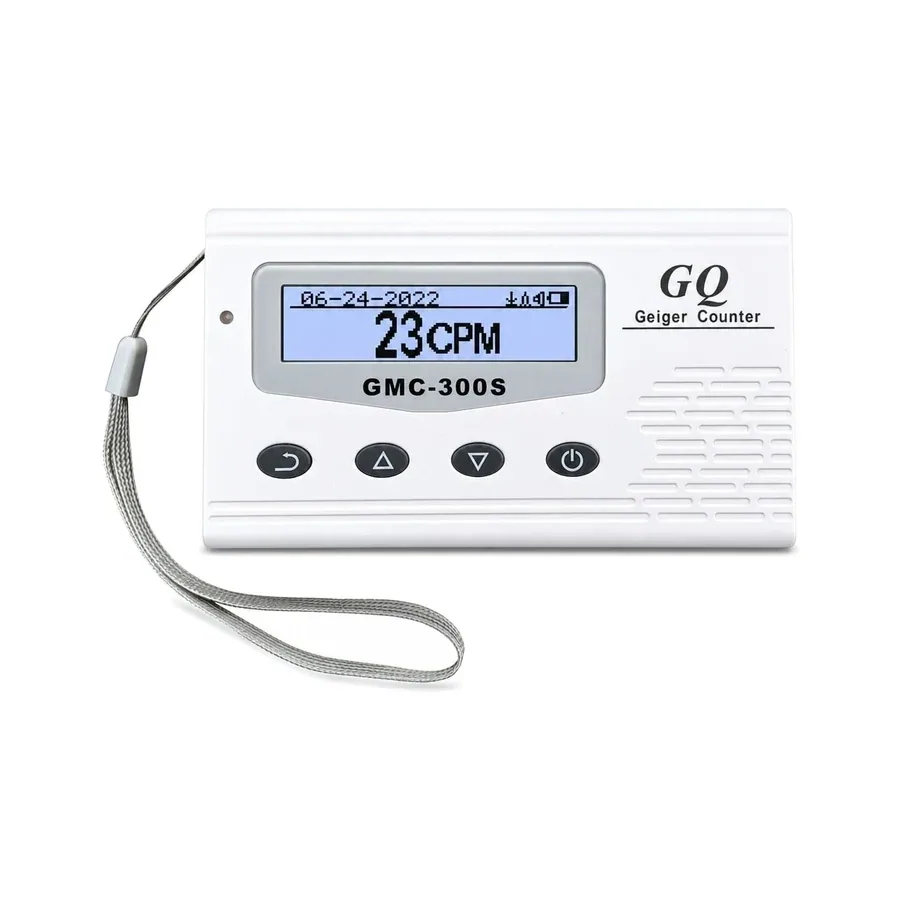
GQ GMC-300S
Well-known brand2 of 5
A trusted runner-up from the most recognisable name in consumer Geiger counters, but it charges almost double for the same core radiation readings PrecisionRad gives you out of the box.
What we liked
Long-established consumer Geiger counter brand
Clear digital dose-rate readout
Proven track record for home item and surface checks
Solid, familiar handheld format
What to know
At €89.00, it costs about €39 more than our top pick for the same core readings
Dated, menu-heavy interface takes real patience to learn
First-time setup is slower than a household device should be
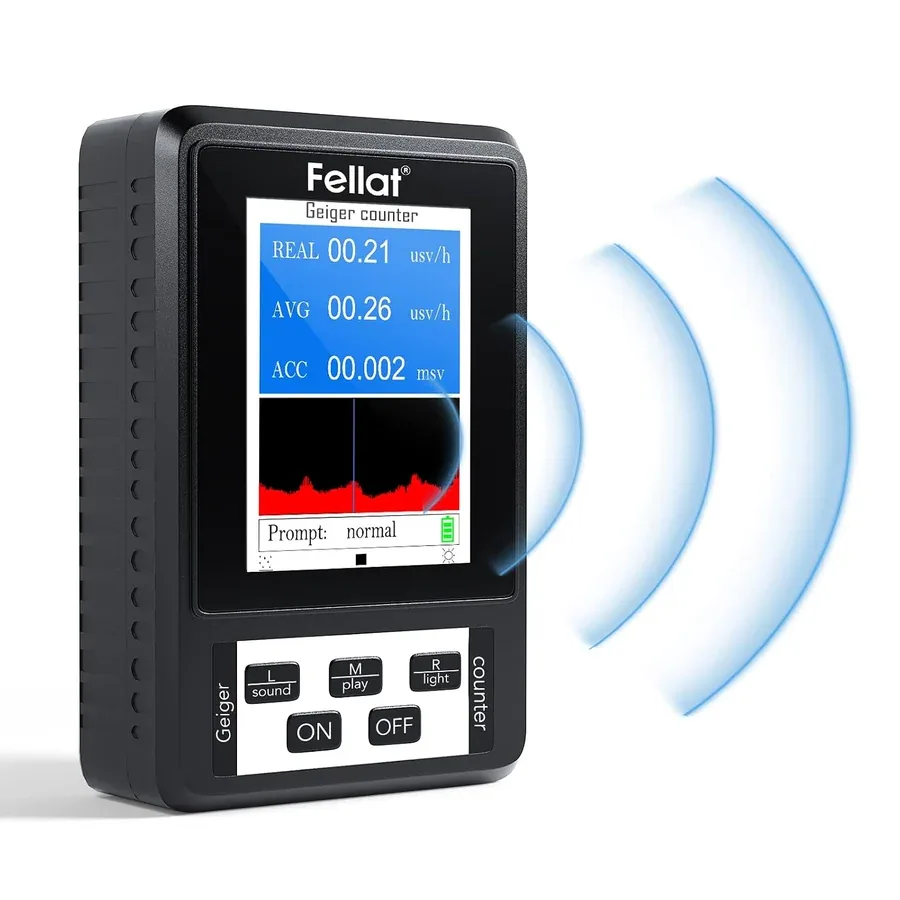
A handheld radiation detector from FELLAT with a G-M tube, rated 4.5 out of 5 by 287 Amazon buyers. It shows a real-time and a cumulative value, but at €79.99 it costs about €30 more than our #1, and the batteries are not included.
What we liked
Detects X-ray, gamma, and beta radiation
G-M tube with a stated precision of 0.01 µSv/h
Real-time reading every second, plus a cumulative value
Handheld and pocket-sized at about 130 g
What to know
At €79.99, it costs about €30 more than our top pick
Batteries are not included: it needs AA cells or the USB cable
The listing describes an alarm above 0.5 µSv but no threshold you set yourself
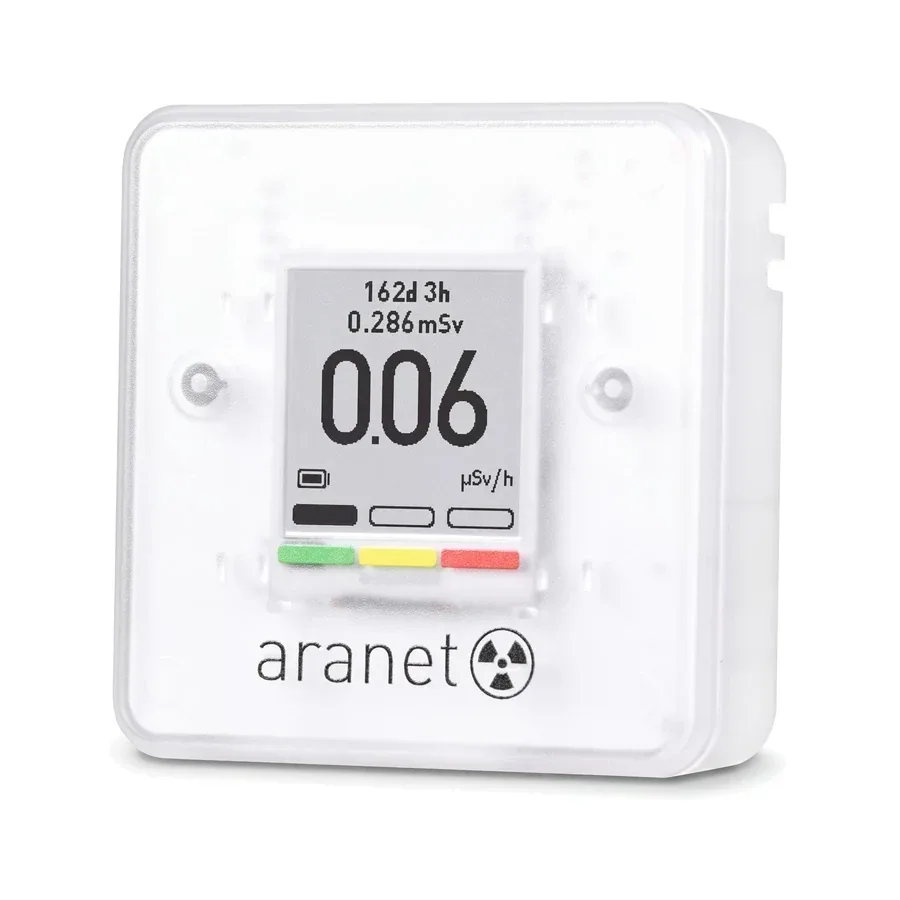
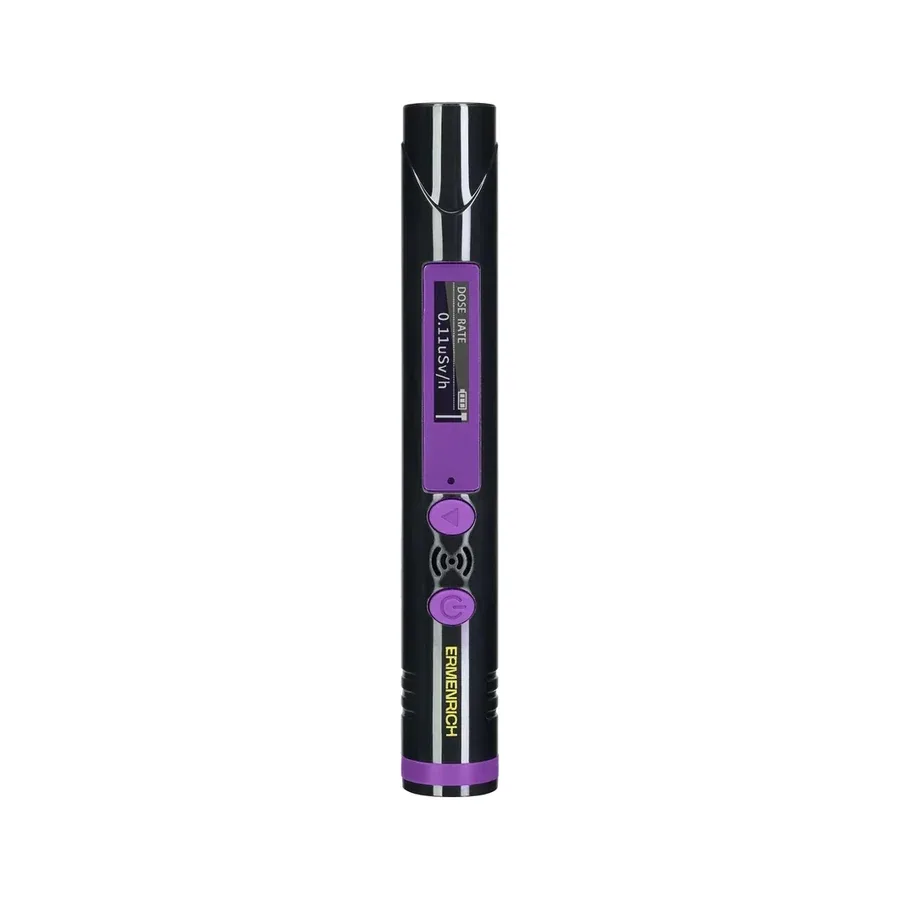
The pocket-pen design is genuinely neat, but it still asks about €10 more than PrecisionRad while offering fewer alert modes and no exposure-tracking depth.
What we liked
Slim pen-style body slips into a shirt pocket
Covers beta, gamma, and X-ray
Rechargeable with a built-in LCD display
Sound and light alarm options
What to know
Still about €10 more than our top pick at €59.95, with fewer alert modes and no exposure-history tracking
No customer reviews on this listing yet
The tiny pen-format screen is hard to read at a glance
Half price at the official checkout: €49.99 instead of €99.98Free delivery, dispatched within 24 hours on working days30-day money-back guarantee
Why it stays our pick
Test it before it comes home
Hold PrecisionRad up to vintage ceramics, old watches, or uranium glass and get a live reading in seconds, at the stall, before you pay.
An alarm you set yourself
Choose your own threshold and PrecisionRad warns you the instant a reading crosses it, by sound, light, or silent vibration.
See your exposure over time
It logs average, maximum, and cumulative exposure, so you see the full pattern of a room or a collection, not just one number.
We Compared The Leading Home Radiation Detectors: Here's Why PrecisionRad Took Our #1 Spot
We compared the leading consumer radiation detectors on spec sheets, alert systems, tracking depth, and what each one actually asks of a normal household. Some were impressive instruments. Most were impressive instruments with the wrong learning curve, built for people who enjoy menus more than answers.
PrecisionRad ended up at #1 because it refuses to make this complicated. Live readings in seconds, an alarm you set yourself, three ways to be alerted, full exposure tracking, all inside a casing tough enough to live in a toolbag. Here's what stood out, angle by angle.
An Answer In Seconds, Not A Guess
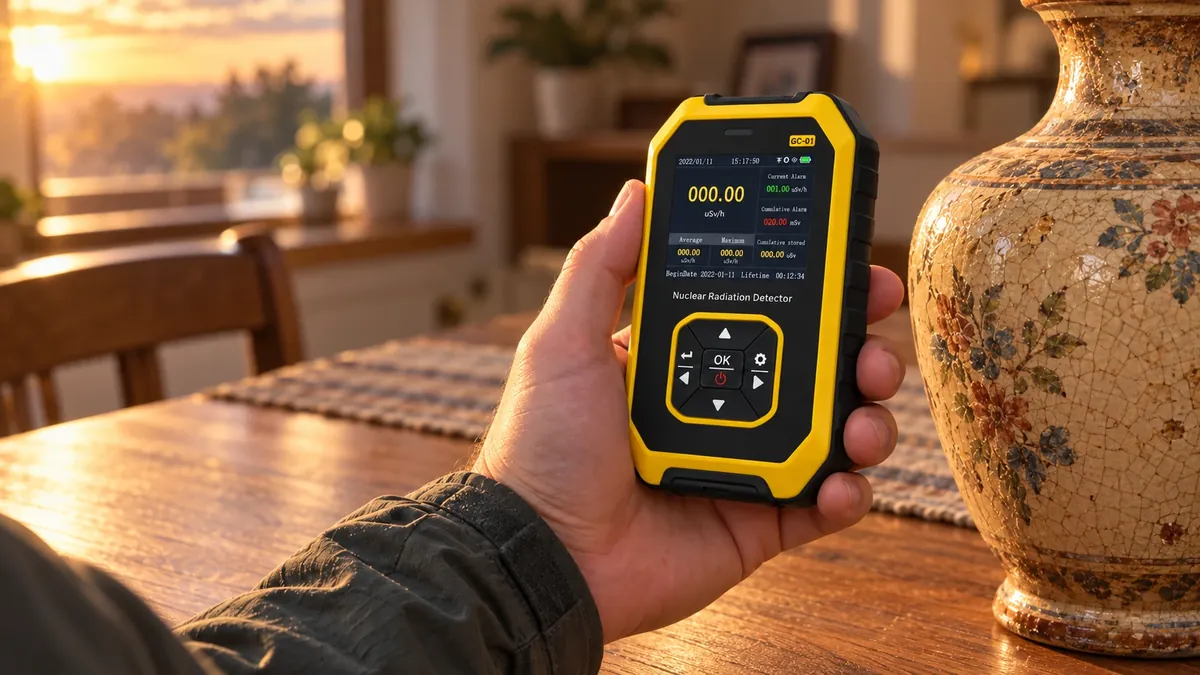
Switch it on. Hold it near the plate. Read the number. That's the entire process. A live radiation level on screen within seconds, and a decision you can make right there: keep the plate, or set it back on the table and walk away. No modes to cycle through, no calibration ritual, no manual you have to study before the device becomes useful.
That speed is the point. Most consumer Geiger counters bury the answer under menus, unit conversions, and abbreviations that only make sense after an evening on a hobbyist forum. PrecisionRad shows the level, plainly, in real time. If you can read a kitchen thermometer, you can run a check. For a device the whole household should be able to grab, that's the standard that counts.
Set The Alarm Once, Then Stop Thinking About It
The custom threshold is the most useful feature. Set your own limit once (whatever level you want flagged), and the moment a reading crosses it, PrecisionRad speaks up. You're not squinting at digits trying to remember what's normal for a ceramic glaze versus a basement wall. The device holds that line for you, on every single check, without you thinking about it.
It also warns you your way. Sound at home, when you want the room to hear it. Light when the environment is loud. Silent vibration at a market stall, where you'd rather not announce to the seller that their art deco lot just tripped an alarm. Three modes reads like a footnote on a spec sheet, until the day you genuinely need the quiet one.
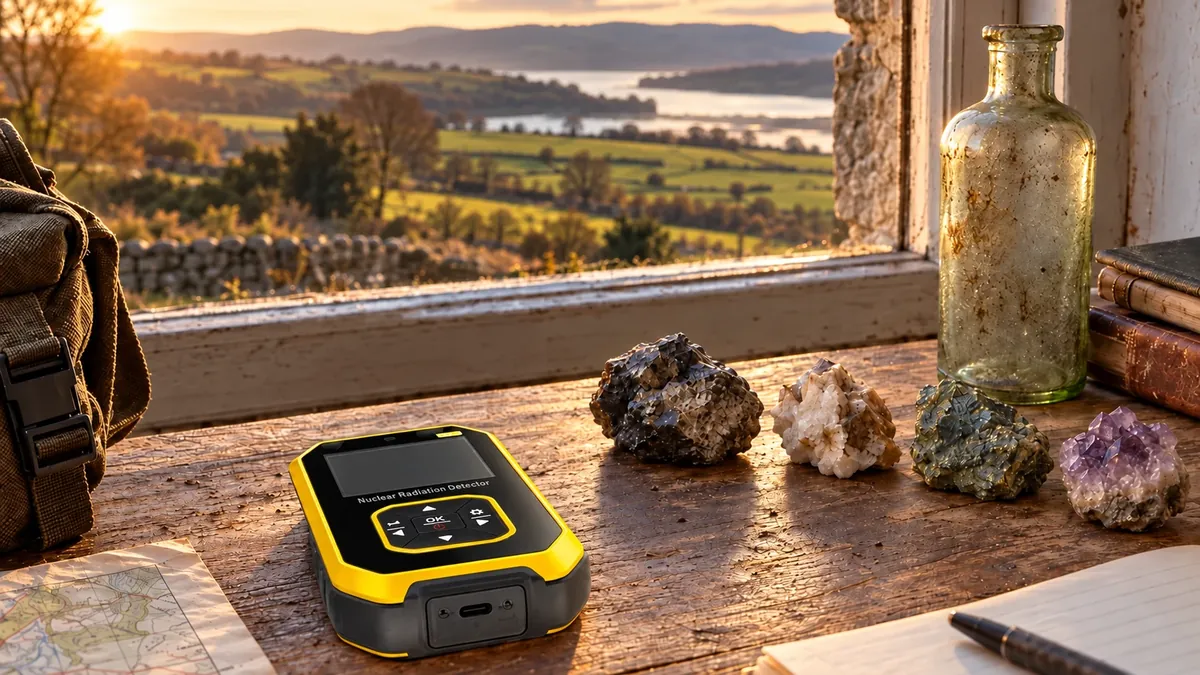
The PrecisionRad on a desk beside a row of minerals and an old glass bottle.
Average, Maximum, Cumulative: The Numbers That Matter
A single reading is a snapshot. Exposure is a pattern, and PrecisionRad records the whole thing: your average level, the maximum it has seen, and your cumulative exposure over time. That last figure matters most: it's the difference between 'this item spiked once' and 'this room runs high all day, every day'.
For renovators pulling apart an old property, collectors with a cabinet full of vintage glass, or anyone checking a house room by room, this is the depth that changes how the device gets used. You stop reacting to individual beeps and start reading the trend. After a week, the numbers show the pattern.
A Serious Sensor In A Casing You Can Abuse
Under the readout sits an energy-compensated GM tube, the sensor principle serious instruments are built around, tuned so readings repeat instead of swinging with every energy shift. You'll never see that tube, but you'll see its work every time a second pass over the same plate lands on the same number. That consistency is what you're actually paying for, and it's exactly where standard budget counters cut corners.
The casing is plain ABS plastic, and it isn't winning any design awards. Honestly, good. That's the reason this thing rides in a glovebox, gets dropped into a toolbag, and still switches on. A detector should be built like a tool you use, not an ornament you handle with care. Grab it, point it, read it, put it back: the housing is made for exactly that life.
The PrecisionRad held near a rock face above a disused quarry.
The Smart Way To Put One In Your Drawer
Then there's the price, which made the final call easy. PrecisionRad sells for €49.99 at the official checkout right now (50% off the regular €99.98), with multi-packs discounted up to 75% for anyone covering a family or a second home. Orders ship free and dispatch within 24 hours on working days from an EU warehouse, so the checking starts this week, not next month.
There's no leap of faith either. Every order carries a 30-day money-back guarantee: a full refund if you're unsatisfied for any reason. Test the plates, the watch, the basement wall. If it doesn't earn its spot in the kitchen drawer, send it back. Confirm the current price on the official page.
Questions readers ask
How does PrecisionRad actually work?
It uses an energy-compensated Geiger-Müller (GM) tube, the same core technology as professional survey meters. Hold it near an item or surface and it displays the radiation level on screen in real time. If a reading crosses the alarm level you've set, it warns you instantly by sound, light or vibration.
Do I need any training to use it?
No. There's nothing to calibrate or configure before first use: switch it on, point it at what you want to check, and read the screen. Setting your personal alarm threshold takes a few seconds, and the cumulative exposure tracker runs automatically in the background.
Why is it so much cheaper than professional dosimeters?
PrecisionRad is sold directly to consumers, so you're not paying for distributor margins, industrial certification paperwork or data-logging software most households never open. The savings come from the sales model: the detection core is still a proper energy-compensated GM tube in a rugged ABS casing.
Will it pick up Wi-Fi, phone signals or microwave 'EMF'?
No, and that's deliberate. PrecisionRad measures ionising radiation: the kind given off by radioactive materials such as certain old ceramics, watch dials and minerals. Wi-Fi and phone signals are a completely different, non-ionising type of emission and need a different kind of meter.
How long does delivery take?
Orders are dispatched quickly and sent with tracked delivery, so you can follow your parcel from warehouse to doorstep. Exact timing depends on your location and is confirmed with your order summary at checkout.
What if it's not what I expected?
Every order is covered by a 30-day money-back guarantee. Test it around your own home (your antiques, your worktops, your basement), and if you're not satisfied, return it for a refund.
Important information
Prices come from the maker’s shop or the retailer at our last check and can change without notice. The discount on the pick is the maker’s own campaign, and the list price is the one its shop strikes through.
Our #1 pick
PrecisionRad
PrecisionRad took our #1 spot on reading speed, alert flexibility, exposure tracking, and price, and right now the official checkout lists it at €49.99 instead of €99.98, with multi-packs discounted up to 75%. Every order ships free, dispatches within 24 hours on working days from an EU warehouse, and carries a 30-day money-back guarantee.
The obvious pick. Nothing here matches its mix of reading speed, alert flexibility, and tracking depth, and at €49.99 with a 30-day money-back guarantee, nothing comes close on value either.
Half price at the official checkout: €49.99 instead of €99.98Free delivery, dispatched within 24 hours on working days30-day money-back guarantee
How we rank
Speed to an answer: how fast the screen shows a reading you can act on, with no menus in the way.
Alert flexibility: a threshold you set yourself, plus sound, light, and vibration options for different situations.
Exposure depth: whether the unit tracks average, maximum, and cumulative levels, or just spits out spot numbers.
Total cost of a good answer: at €49.99, PrecisionRad undercuts everything we ranked; the closest rival here is €59.95 and the premium pick runs €149.00.
Buyer confidence: guarantee terms, dispatch speed, and how much trust the seller's offer actually earns.